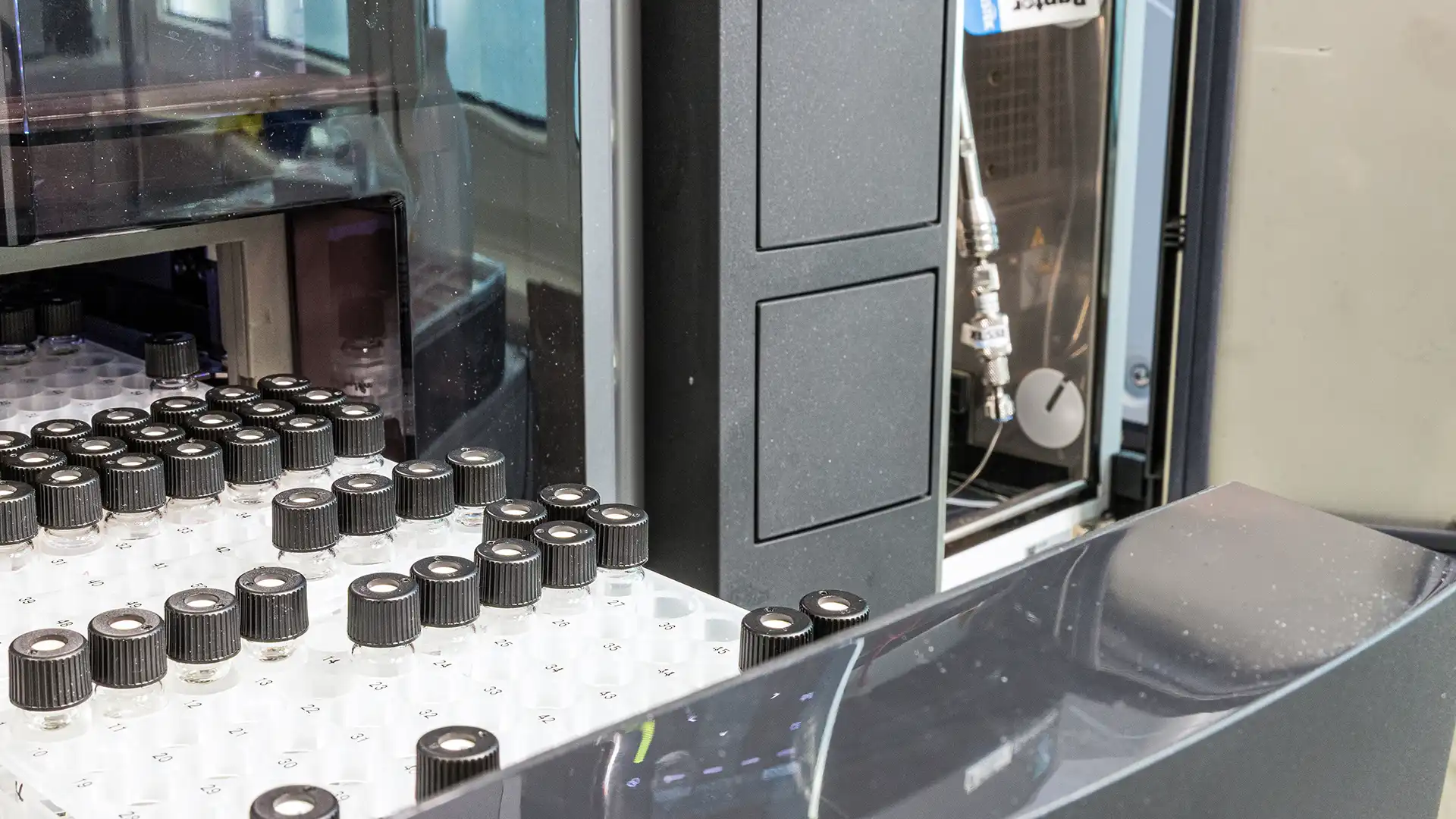
This photograph shows a row of laboratory bottles, with a brown bottle with a cap in focus. It symbolises the use of chemicals and reagents in scientific experiments.

Chemistry

The Chemistry Department is working on the topics of Emissions from Products, Bonding Agents/Adhesives, Natural Oils, Wood Preservatives and Quality Assurance.

The laboratory area Chemical Testing is the organisational unit within the Entwicklungs- und Prüflabor Holztechnologie GmbH (EPH).

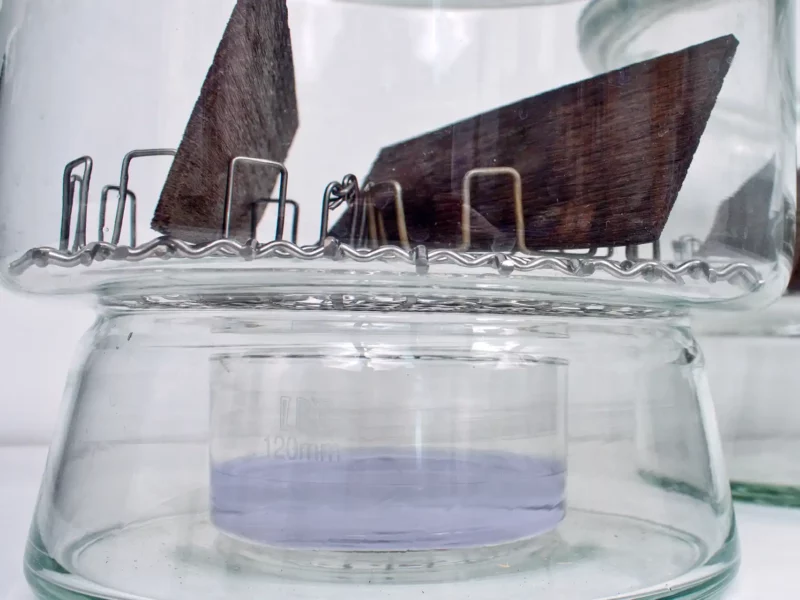
glass desiccator

Emissions from productsEmissions from products

  • Reduction of formaldehyde emissions
  • Causes and reduction of VOC, ammonia and olfactory emissions
  • Emissions under challenging conditions
  • Analytical methods
  • Technological measures in the production of low-emissive products

Bonding agents/adhesivesBonding agents/adhesives

  • Modification of aminoplastic resins
  • Application of natural raw materials
  • Synthesis of bonding agent components
  • Polymer analysis
  • Chemical and rheological characterisation
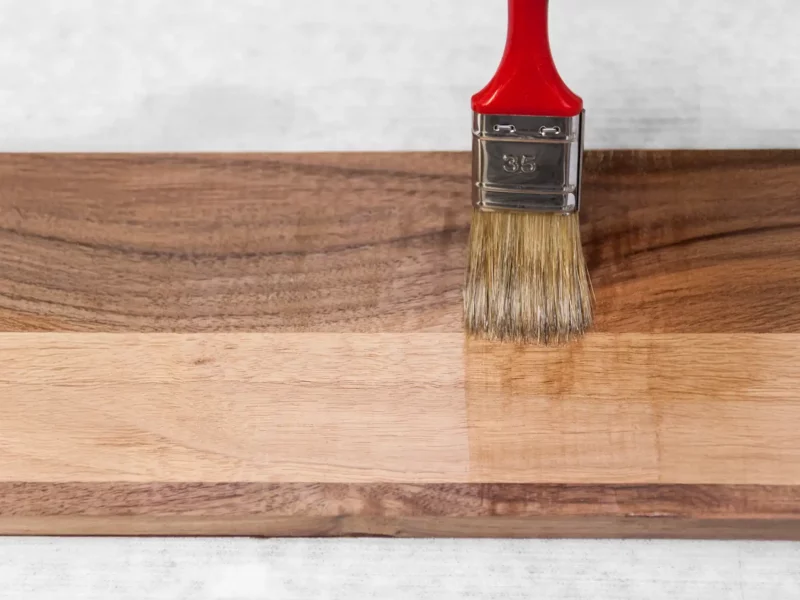
Brush application of oil on a wood sample

Natural oilsNatural oils

  • Modification and drying
  • Reduction of drying time
  • Chemical and rheological characterisation
  • Impregnation for the hydrophobing of wood
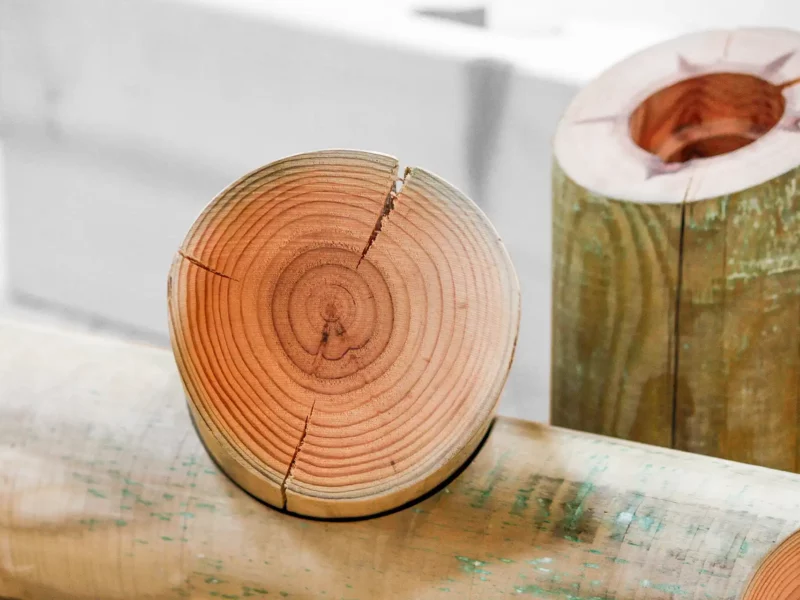
transverse crosssection of roundwood impregnated with copper salt

Wood preservativesWood preservatives

  • Soaking methods
  • Decontamination
  • Analytical attendance to the remediation of artwork and cultural assets
  • Analytical methods

Resource modification and developmentResource modification and development

  • Development of modified bonding-agent components for flame-retardant coating systems
  • Development of novel flame-retardant additives based on renewable resources
  • Development and use of modified vegetable oils in bonding agents for coatings and impregnating agents
  • Modification of natural polymer as additives and as a basis for bonding agents
  • Development of catcher systems to reduce VOC and formaldehyde emissions
  • Investigations into polymeric properties (molar mass distribution, viscosity, other rheological properties)

Technical equipment

  • More than 50 emission-testing chambers
  • Olfactory test devices
  • GC using several detection methods: MSD, FID, ECD, WLD
  • TDS-GC-MS
  • Headspace GC
  • HPLC by way of UV-Vis, Fluorescence, MSD detection
  • GPC
  • Ion chromatographs
  • FIA systems for formaldehyde and ammonia analytics
  • Impregnation laboratory with an 0.7 m³ vacuum-pressure vessel
  • AAS
  • ICP-OES
  • Capillary electrophoresis
  • Rotary viscosity meter/inline rheometer
  • C/N analyser
  • Spectroscopy: FTIR, Raman, NIR, UV-VIS, Fluorescence
  • Chemical reaction technology (10 dm3 pressure reactor with a heating jacket and stirrer)
  • Grinding technology: cutting mill, cryogenic impact mill
  • Mobile emission-measuring systems

Services

  • Damage analyses (e.g., chemical causes of faults in adhesion joints)
  • Bonding agent analytics
  • Contaminant emissions in residential and public buildings
  • Determination of wood preservatives in historical building materials and pieces of art