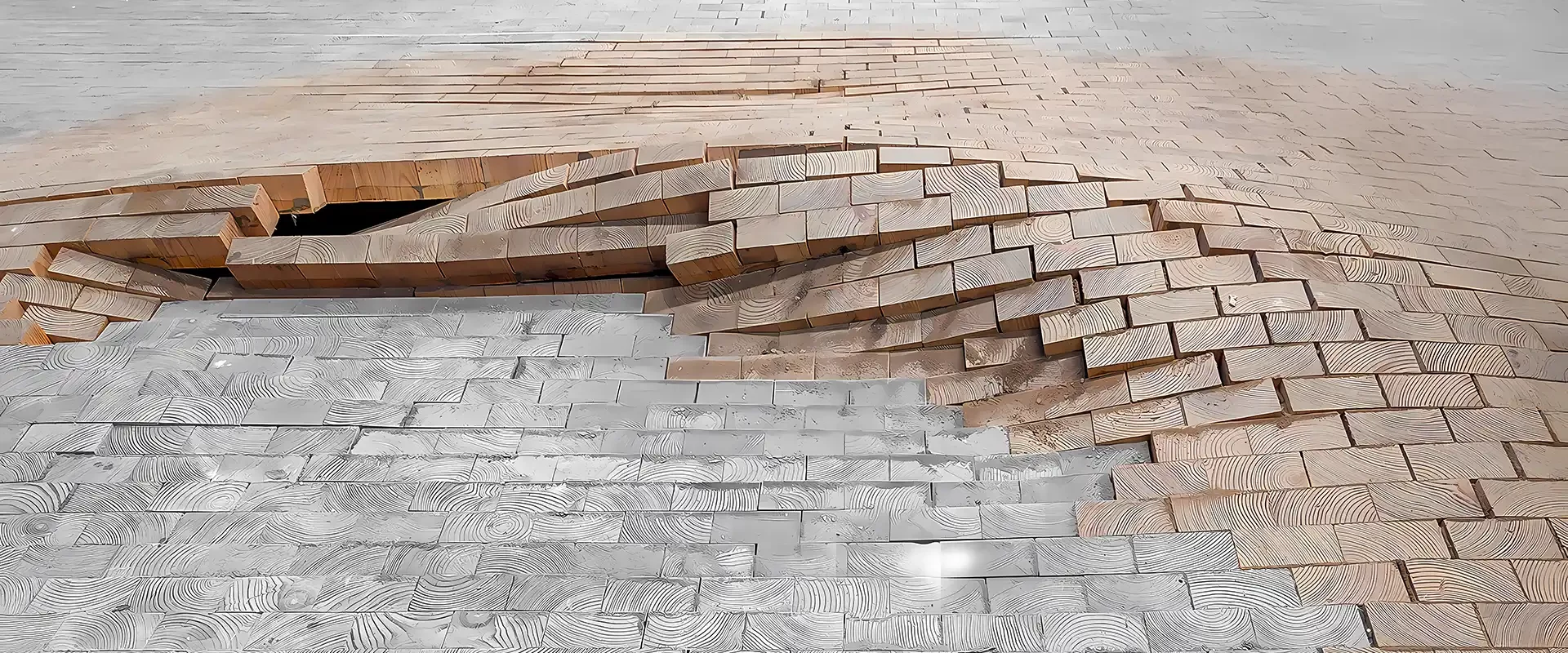
Failure analysis on a wooden floor: End grain/block parquet is bulging over a large area; individual wooden blocks are standing up and forming a crater-like depression.

Failure analysis

The expertise of IHD employees and the wide range of analytical options available enable problems in quality assurance to be clarified and the causes identified in the context of failure analyses on a wide variety of products.

The investigations may focus on, for example:

  • Damage to surfaces
  • Damage to materials
  • Biological and structural damage
  • Emission behaviour
  • Damage caused by weather influences
  • Services
  • Product

The experts at the IHD are generally recognised by courts as publicly appointed and sworn experts.

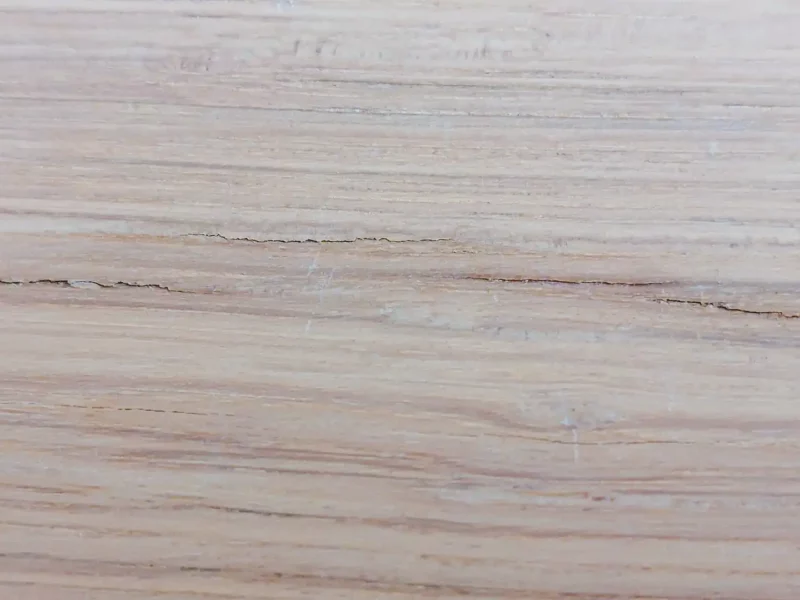
Nahaufnahme einer Holzoberfläche mit langem Haarriss entlang der Maserung

Damage on surfacesDamage on surfaces

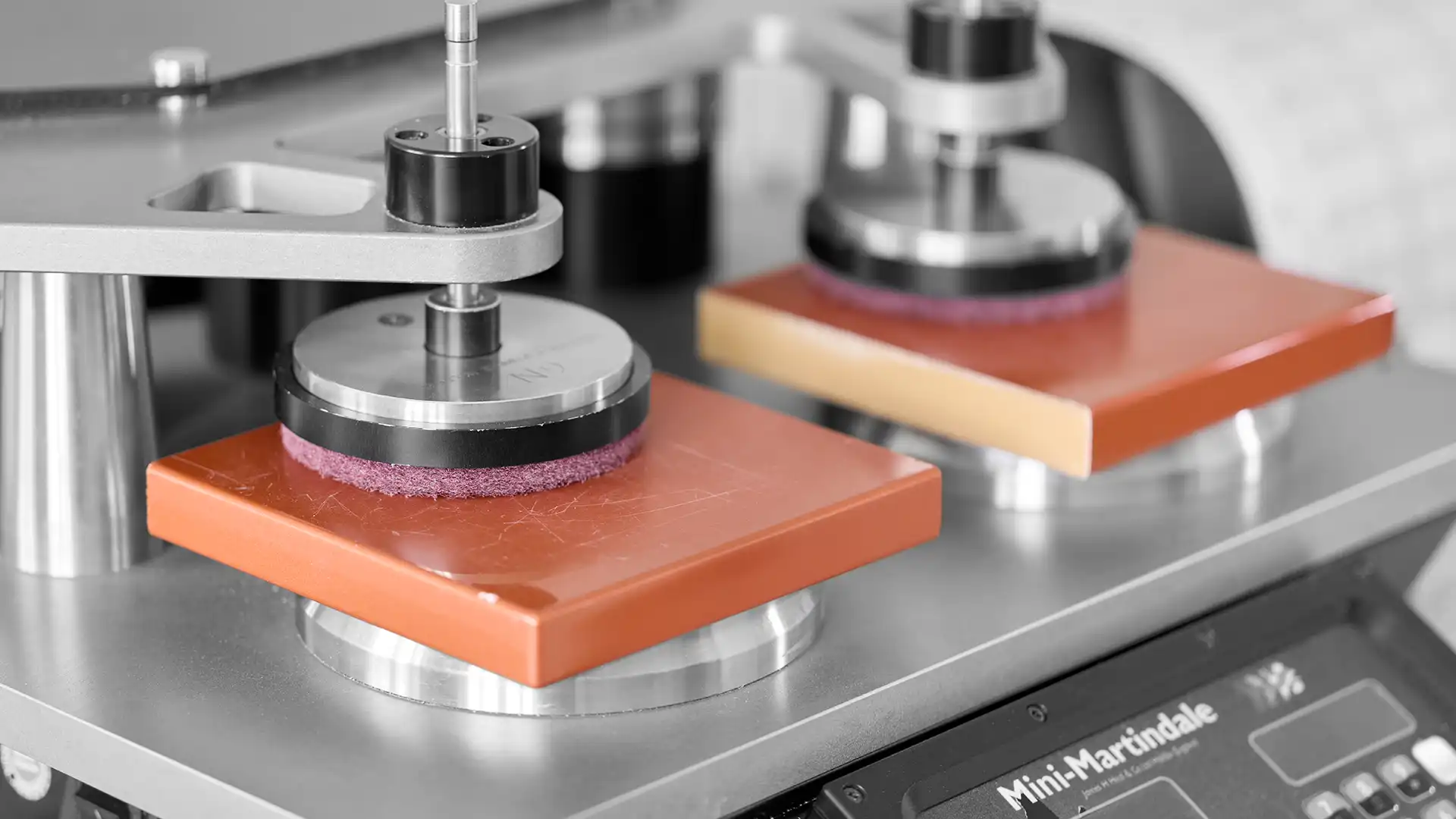
Examination of coatings, layer structures, adhesions, discolourations, bubbles or defects. Typical examination methods:

  • Surface topography (roughness, waviness)
  • Light and scanning electron microscopy
  • Chemical analytics, e.g. spectroscopy (infrared (IR), UV-Vis), Elemental analysis (EDX), thermal behaviour (DSC, TGA)
  • Simulation of environmental influences such as artificial lighting, air conditioning, exposure to liquids, gases or mechanical stresses

Examination of raw materials/substrates and their effect on coatings. Typical characteristics:

  • Density profile
  • Mechanical properties
  • Adhesive distribution
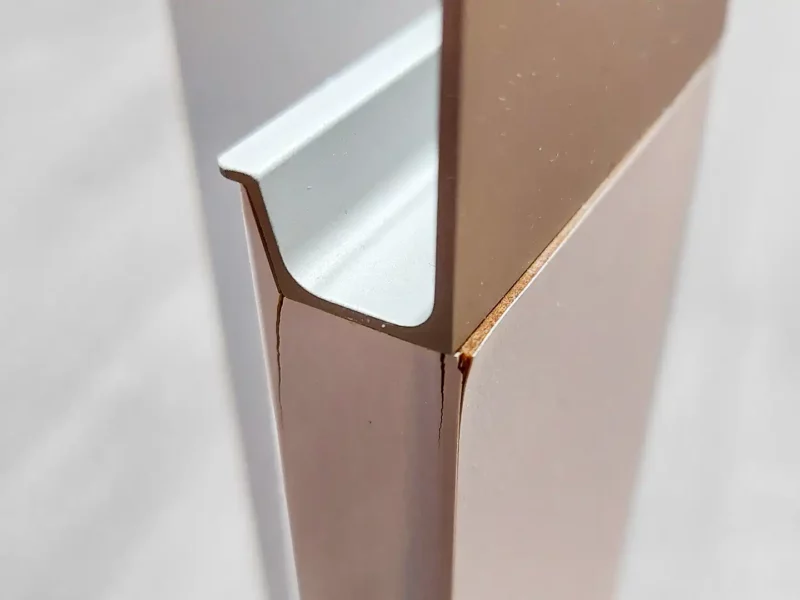
Macro close-up of a furniture edge: stress cracks in the decorative laminate/edge band next to an inserted metal/aluminium profile.

Damage/failure on materialsDamage/failure on materials

Investigations into detachment or the quality of bonds on materials/substances and products/components. Typical methods:

  • Light and scanning electron microscopy
  • Wettability investigations (contact angle, surface tension)
  • Adhesive strength and climatic resistance
  • Chemical analytics of contaminants (GC-MS, HPLC)

Investigations of material properties. Typical characteristic data:

  • Physical – mechanical properties such as internal bond, bending properties, thickness swelling, dimensional change
  • Density profile and particle distribution
  • Thermal characteristic values for adhesives (DSC, TGA)
  • Dimensional stability, creep behaviour, durability
  • Harmful substances

Problems in production facilities for wood based materials and wood products

  • Damage caused by deposits and contamination
  • Premature material failure


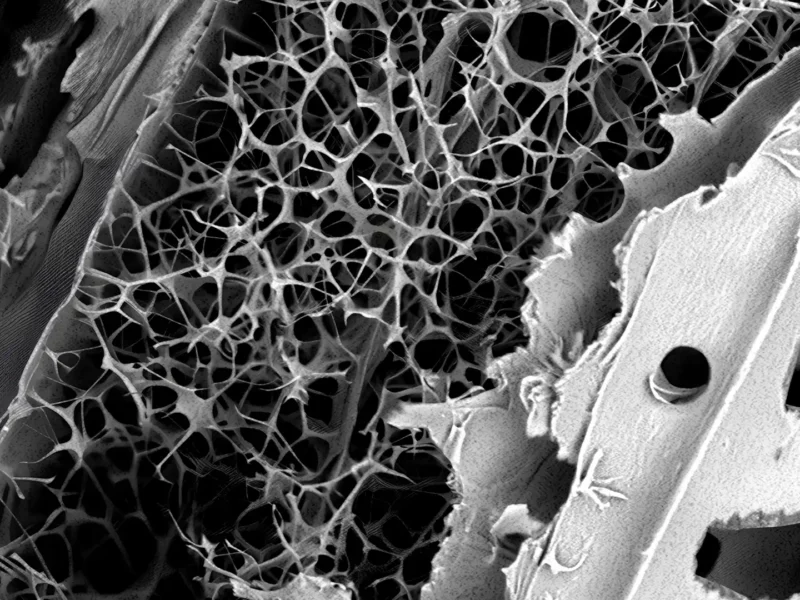
Scanning electron micrograph of a biologically degraded surface

Biological and structural damageBiological and structural damage

  • Determination of harmful organisms (fungi, insects, bacteria, algae) using macro- and microscopic as well as molecular biological methods
  • Wood species identification
  • Structural investigations of wood and wood-based materials
  • Investigation of coatings and adhesives
  • Reflected and transmitted light microscopy
  • Wood preservation tests, damage reports
  • Mould infestation, airborne germ collection, hygienic evaluations
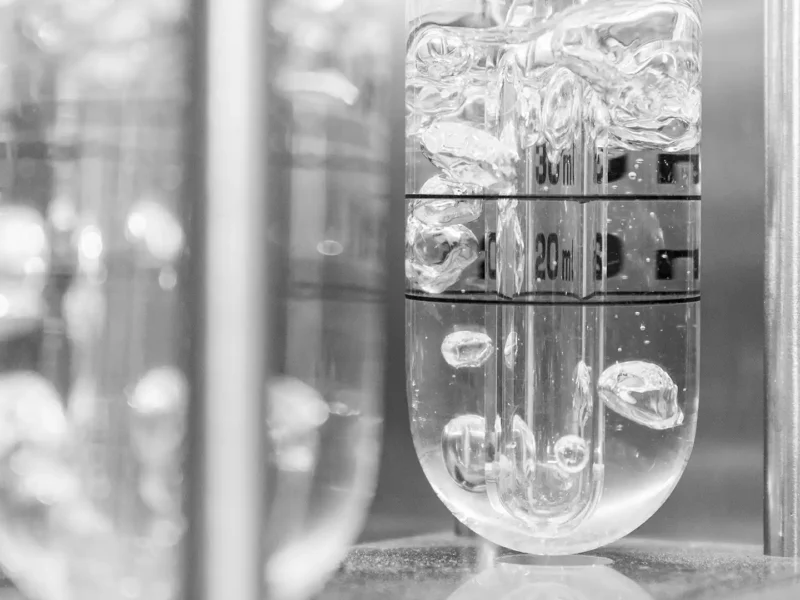
Laboratory gas analysis method: glass impinger/gas-washing bottle with graduations (20–30 mL) where gas bubbles through an absorption liquid—used for sampling and quantifying emissions (e.g., VOCs/aldehydes).

Emissions behaviourEmissions behaviour

Gas analysis

  • Investigation of the emission behaviour (VOC, ammonia, formaldehyde) of various materials, e.g. inline/online emission measurement methods and emissions under demanding conditions
  • VOC analysis for odour pollution
  • Determination of chemical contamination using e.g. GC-MS and HPLC
  • Asbestos determinations
  • Wood preservatives in living and recreational areas
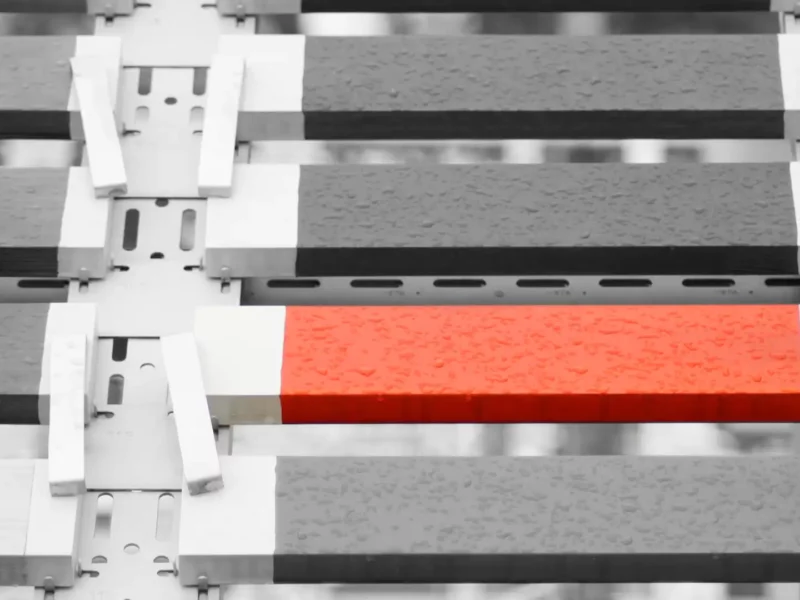
Outdoor weathering rack holding coated test specimens in metal clamps; surfaces are wet from rain. Used for natural exposure testing of coatings/material durability.

Damage due to weather effectDamage due to weather effect

  • Reproduction of light- and heat-induced ageing effects through investigations in changing climates or under artificial weathering/lighting conditions
  • Light and scanning electron microscopy
  • Determination of chemical differences between intact and damaged areas using infrared spectroscopy, EDX and chemical analysis
  • Investigation of microbial discolouration (bluestain, algae)

Services

  • Recording, measurement, documentation and assessment of damage
  • Determination of the causes of damage
  • Simulation of damage patterns and mechanisms
  • Determination of harmful organisms
  • Hygienic evaluations
  • Development of proposals for damage repair and reconstruction
  • Development of proposals for prevention and assessment of consequential damage
  • Preparation of investigation reports and damage reports