
From 22 to 24 October 2025, the Forest Products Society invites you to the renowned International Conference on Wood Adhesives in Vancouver, Canada. International experts from industry, research and politics will come together to exchange ideas on current developments in bio-based adhesives, sustainable binding agent technologies and innovative applications in wood processing, among other topics.
The conference’s theme is ‘Sustainability & AI’ and it offers a diverse programme of specialist presentations, panels and networking opportunities. With over 300 participants from all over the world, the conference is a unique platform for the exchange of knowledge and ideas.
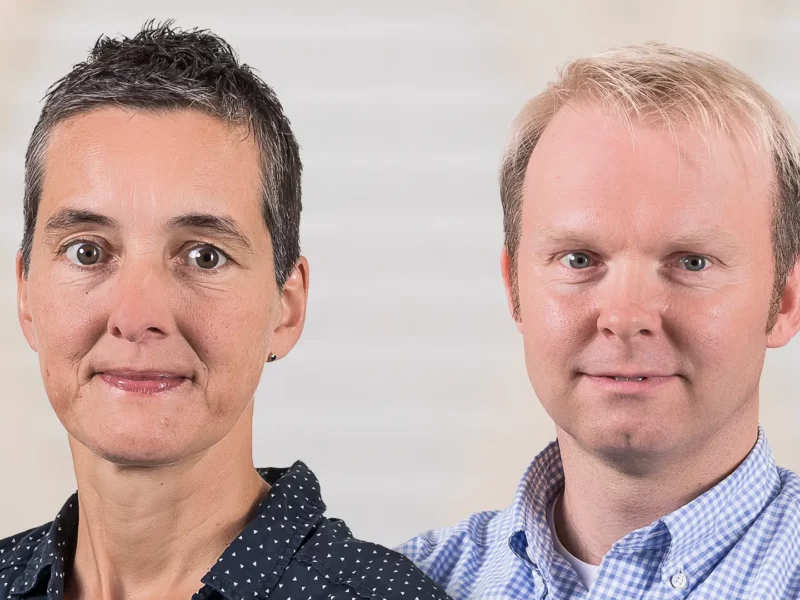
The following presentations by IHD staff members will be given at the conference:
Thursday, October 23rd, 10:30 AM – 12:00 PM
Concurrent Session: Bio-Based Adhesives for Furniture Components B3
Speaker: Almut Wiltner; Scientist, IHD, Germany
Title: Influence of Cyclic Carbonate Structure on Reactivity with Amines and Formation of Non-Isocyanate Polyhydroxy Urethane (NIPU) Network
Abstract: The formation of isocyanate-free urethane (NIPU) network structures is well described in literature. Polyfunctional cyclic carbonates and primary amines are used to build polyhydroxy urethanes which can be applied as adhesives. Cyclic carbonates can be easily synthesized from epoxides using CO2 or from polyols by addition of dimethyl carbonate (DMC). The structures of both, the cyclic carbonate and amines, govern the reactivity and network structure. In this study, different cyclic carbonates from polyols (e.g. sugar alcohols) or epoxides (e.g. PEGDE) are mixed with amines (IPDA, PEI) in defined molar ratios. The reactivity and urethane formation are investigated applying rheological measurements, thermal analysis (DSC) and IR spectroscopy. The adhesion behaviour of selected formulations on wood is studied by ABES measurements as well as by adhesion tests acc. to DIN EN 204/205.
Friday, October 24th, 8:00 AM – 10:00 AM
Concurrent Session: Testing B5
Speaker: Marco Mäbert; Scientist, IHD, Germany
Title: Modified TMP Process – A New Way of Fibre Production from Wood Waste Material
Abstract: Currently, no recycled wood waste is used in the production of single-layer MDF. One of the main reasons is the low moisture content (MC < 20 %) of the waste. As a consequence the brittleness is higher than for fresh wood chips (MC > 70 %). The defibration process therefore leads to an increase in fiber material with a high proportion of short fibers and dust. Due to the higher surface area of the smaller particles the bonding capacity decreases. This in turn has a negative impact on the material properties. In contrast to conventional MDF plant technology, the modified TMP (mTMP) process makes it possible to increase the MC of the wood waste chips. The new technology can be integrated into the standard processes. No additional process step is necessary. The fibres from recycled wood waste showed only minor differences to fresh wood fibres. In consequence also the physical properties of MDF differs only slightly.
Further information can be found here: https://www.woodadhesives.org/