
The furniture industry has been under intense pressure to innovate since the coronavirus pandemic began. Rising raw material prices due to difficulties in importing wood, local damage such as bark beetle infestations and geopolitical uncertainties are placing additional strain on companies.
At the same time, there is a growing desire for greater sustainability: 77% of customers attach great importance to this. This is also reflected in legislation – the new EU Ecodesign Regulation calls for a stronger focus on the circular economy and more intensive use of wood resources.
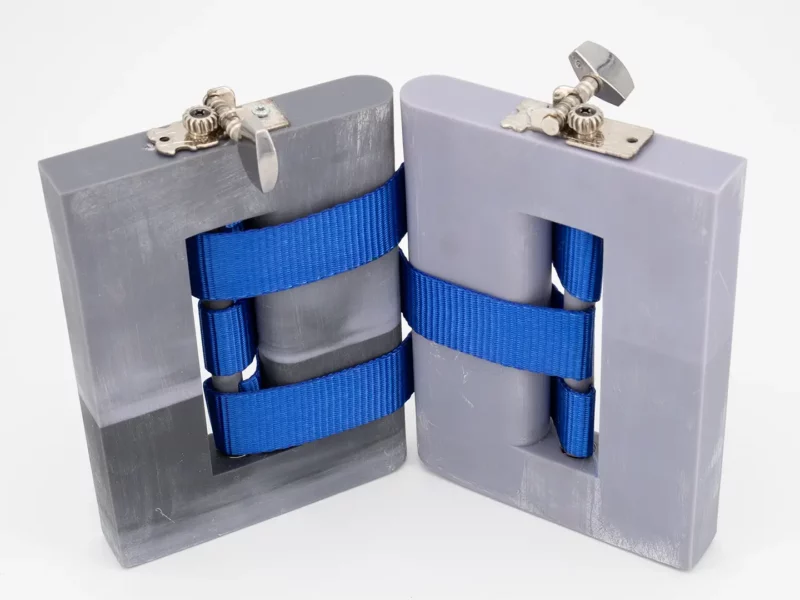
As part of the INNO-KOM (market-oriented research and development) funding guideline, the Federal Ministry for Economic Affairs and Energy (BMWE) is funding the EntFalteFuM research project (funding code: 49MF240138). The aim of this project is to develop a novel folding element for furniture constructions that combines wood-based materials with textiles. This folding element is to be used both as a folding fitting for doors and flaps and as a folding system for origami furniture. The basic principle of the system is the opposite arrangement of textile strands, which brace the wood components and thus enable a controlled rolling movement against each other. In contrast to known textile hinges with V-groove mitres, a cylinder mitre is intended to significantly increase the service life here, as it avoids notch stresses.
The research primarily addresses markets that demand lightweight, flexible and sustainable furniture. These include trade fair furniture, which must be space-saving to transport and quick to assemble, as well as applications in caravan, vehicle and ship construction, where weight savings play a central role. The fitting can also be an attractive eye-catcher in the field of designer furniture. The folding element not only reduces material and transport costs, but also offers the opportunity to open up new avenues for reparability, recyclability and furniture design.
Contact at the IHD:
Kevin Schlunze, kevin.schlunze@ihd-dresden.de