The construction sector faces major challenges. Alongside the creation of urgently needed housing, the modernisation of existing buildings and resource-efficient construction methods are becoming increasingly important. As a renewable raw material, timber plays a central role in this context. To ensure that timber components can fulfil their function in the long term, effective protection against moisture is crucial. Particularly in the case of internal and external doors, water vapour diffusion has a significant impact on dimensional stability, durability and energy efficiency.
In the ‘climate protectdoor’ research project, the Dresden Institute for Wood Technology (IHD) is developing innovative solutions for doors made of timber and wood-based materials. The aim is to replace aluminium vapour barriers with thermoplastic films and to make composite doors more sustainable and easier to recycle. The innovative approach lies in the dual function of the films: on the one hand, they act as a vapour barrier and contribute to the dimensional stability of the door leaf. On the other hand, they serve as an adhesive layer, bonding the individual door layers together. This makes it possible to reduce the amount of adhesive used, simplify manufacturing processes and conserve resources. As part of the development of door systems, suitable films are being investigated in terms of their barrier and adhesive properties. In addition, hygroscopic, thermal and mechanical material properties are being determined experimentally and incorporated into FEM simulation models. This allows different layer structures to be digitally evaluated and optimised prior to manufacture. Demonstrators are then produced and subjected to comprehensive testing. Another key focus is circularity. Thermoplastic films open up new possibilities for selectively separating door layers at the end of the product life cycle and for reusing or recycling materials. With ‘climate protectdoor’, the IHD combines component development, building physics, joining technology and FEM simulation into an innovative overall concept for sustainable, high-performance and circular door systems.
The project, with funding reference number 49MF250115, is funded by the Federal Ministry for Economic Affairs and Energy under the INNO-KOM 2023 funding guideline – ‘Market-Oriented Research and Development’ module.
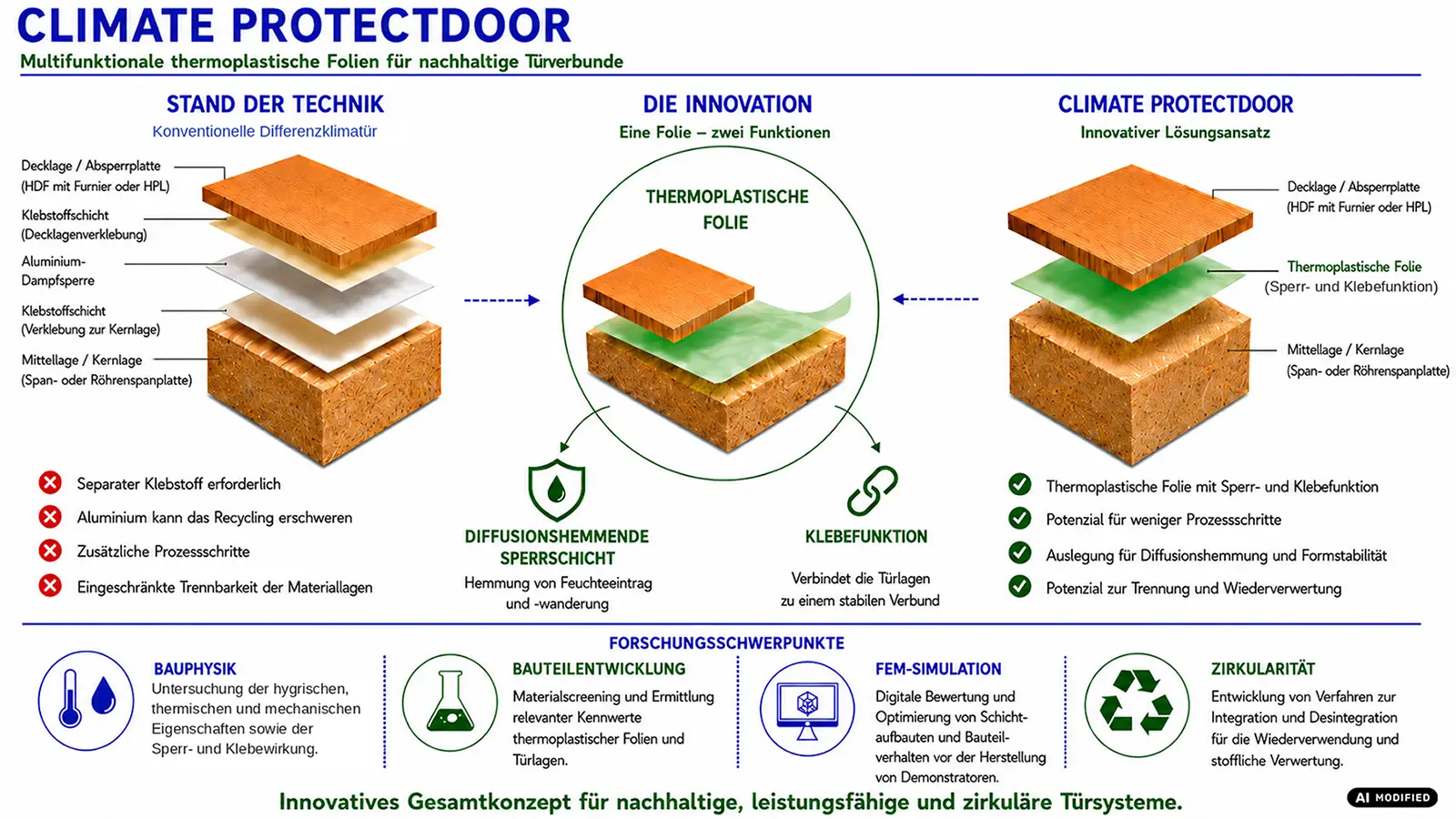
Fig. 1: Overview of the key elements of the ‘climate protectdoor’ project
Contact at the IHD: Sebastian Kegel, sebastian.kegel@ihd-dresden.de